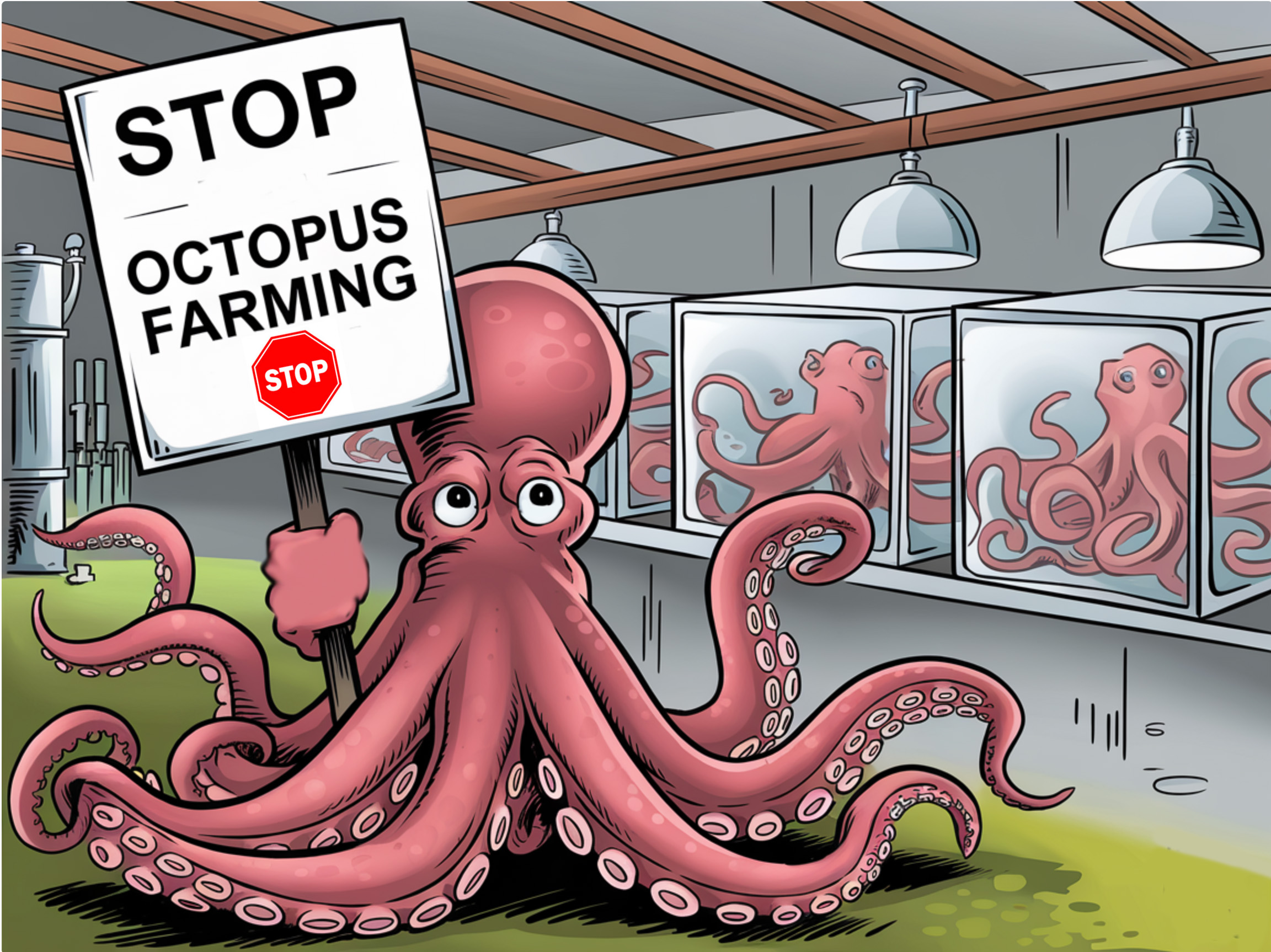
“Intelligent Beings, Not Food Items: Octopus Farming Campaign”
OBJECTIVE: Create a powerful visual representation of octopus sentience and intelligence to support ALI’s campaign against industrial octopus farming.
APPROACH: I used an illustrative style with emotional appeal, portraying an octopus as a sentient activist protesting the captivity of its own kind. The design uses visual storytelling to highlight the ethical concerns of farming these highly intelligent creatures.
INTENDED AUDIENCE: Policy makers, seafood industry stakeholders, and consumers who may not be aware of octopus intelligence and the ethical implications of industrial farming.
IMPACT: This visual aims to create an emotional connection between viewers and octopuses, transforming how people perceive these intelligent marine animals and supporting ALI’s policy initiatives against octopus farming.

“Ocean Guardians: The Unseen Majority”
OBJECTIVE: Create an engaging visual that highlights the importance of protecting marine ecosystems and the diverse species that often remain invisible to the public eye.
APPROACH: I designed this underwater scene featuring various marine species surrounding a bold, central message. The vibrant colors and dynamic composition draw viewers in while the simple yet powerful message reminds us that conservation extends beyond what’s immediately visible. The diverse representation of marine life (sharks, jellyfish, crab, whale) emphasizes the biodiversity at stake.
INTENDED AUDIENCE: General public, marine conservation advocates, policy makers, and educational programs focused on ocean literacy.
IMPACT: This design aims to shift perspective on marine protection by emphasizing our responsibility to protect species that exist largely outside human awareness. The memorable slogan “Protect What We Cannot See” serves as both an educational reminder and a call to action.

“Universal Rights: Bridging Land and Sea”
OBJECTIVE: Create a powerful visual statement that unifies animal protection across ecosystems, emphasizing that both terrestrial and aquatic species deserve equal consideration in welfare and conservation efforts.
APPROACH: I designed this composite using high-quality photographic elements arranged around a clear, bold message. The deliberate inclusion of both iconic land animals (lion, panda, tiger) and diverse marine life (turtle, sharks, dolphin, penguin) creates visual balance between these ecosystems. The blue backdrop unifies the composition while subtly emphasizing water as the foundation of all life.
INTENDED AUDIENCE: Conservation organizations, policy makers, educational institutions, and cross-sector collaborations working on comprehensive animal protection initiatives.
IMPACT: This design serves as both an educational tool and advocacy piece, encouraging viewers to expand their concept of protection beyond familiar charismatic species to include the full spectrum of animal life. The message is intentionally straightforward and universal, making it accessible across different cultures and contexts.
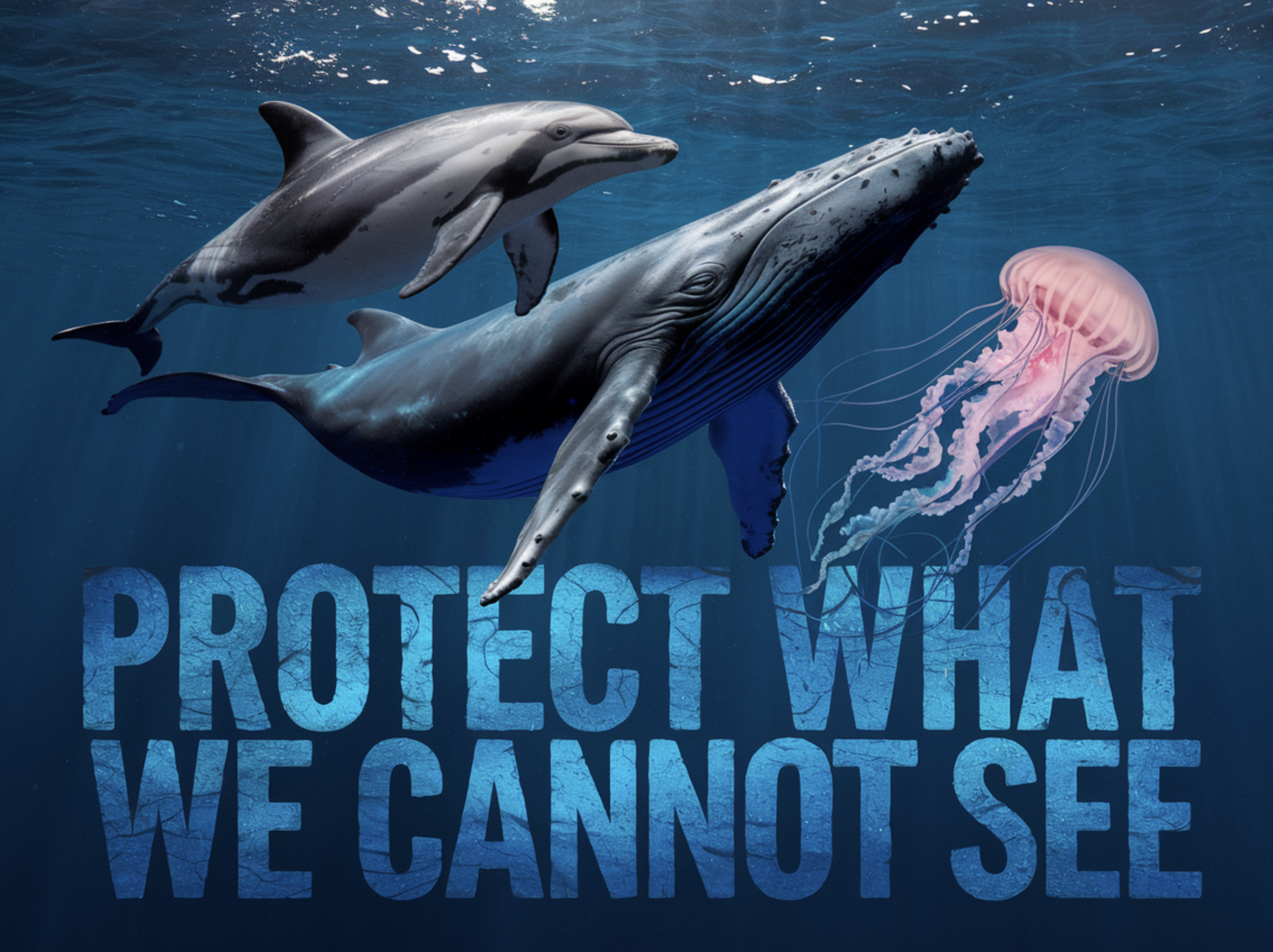
“Protect What We Cannot See: Safeguarding Marine Ecosystems Below the Surface”
Objective
To raise public awareness about marine biodiversity and ecosystem health, particularly highlighting the interconnectedness of different marine species and the importance of protecting ocean habitats that often remain unseen by the human eye. This campaign aims to inspire conservation action while positioning the Aquatic Life Institute as a leader in marine protection advocacy.
Approach
The campaign uses powerful visual storytelling that juxtaposes familiar marine creatures (dolphin and whale) with less commonly seen species (jellyfish) against a striking blue backdrop with bold typography. The minimalist design with high-contrast text creates immediate visual impact while the message “PROTECT WHAT WE CANNOT SEE” effectively communicates the campaign’s focus on preserving marine ecosystems that exist beyond our immediate vision. The imagery demonstrates the coexistence of different marine species, emphasizing the complex biodiversity that requires protection.
Intended Audience
Primary audiences include:
- Environmental advocates and conservation-minded individuals
- Policy makers and governmental agencies focused on marine protection
- Educational institutions and students interested in marine biology
- General public with interests in ocean conservation and wildlife protection
- Potential donors and supporters of marine conservation initiatives
Impact
The campaign aims to:
- Increase public engagement with ocean conservation issues by 25% through social media sharing and website visits
- Drive at least 15% growth in newsletter signups and volunteer applications
- Generate media coverage in at least three major environmental publications
- Influence marine protection policy discussions by being referenced in stakeholder meetings
- Establish the Aquatic Life Institute as an authoritative voice in marine conservation, particularly for species that receive less public attention
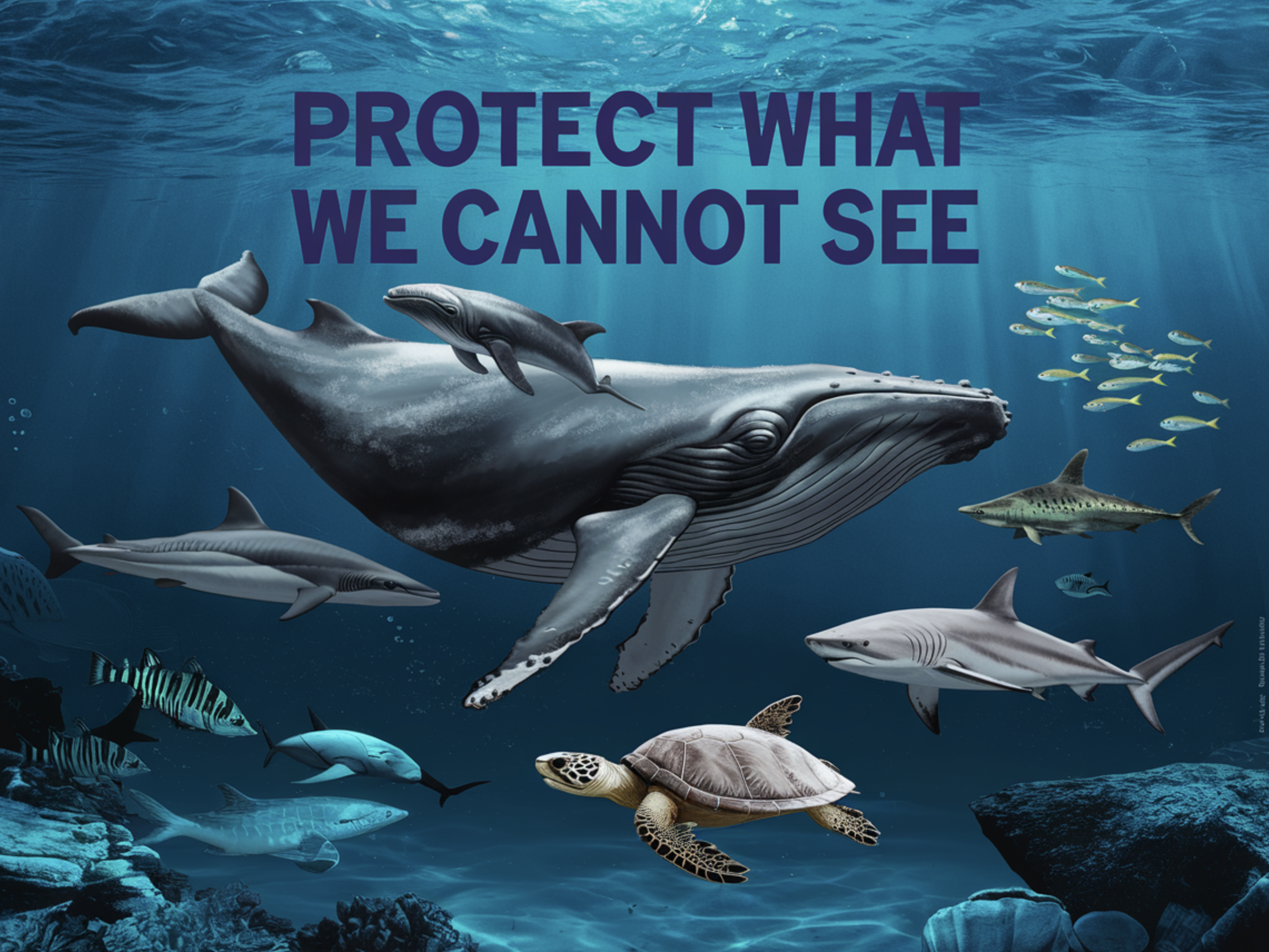
“Protect What We Cannot See: Safeguarding Marine Ecosystems Below the Surface”
Objective
To raise public awareness about marine biodiversity and ecosystem health, particularly highlighting the interconnectedness of different marine species and the importance of protecting ocean habitats that often remain unseen by the human eye. This campaign aims to inspire conservation action while positioning the Aquatic Life Institute as a leader in marine protection advocacy.
Approach
The campaign uses powerful visual storytelling that juxtaposes familiar marine creatures (dolphin and whale) with less commonly seen species (jellyfish) against a striking blue backdrop with bold typography. The minimalist design with high-contrast text creates immediate visual impact while the message “PROTECT WHAT WE CANNOT SEE” effectively communicates the campaign’s focus on preserving marine ecosystems that exist beyond our immediate vision. The imagery demonstrates the coexistence of different marine species, emphasizing the complex biodiversity that requires protection.
Intended Audience
Primary audiences include:
- Environmental advocates and conservation-minded individuals
- Policy makers and governmental agencies focused on marine protection
- Educational institutions and students interested in marine biology
- General public with interests in ocean conservation and wildlife protection
- Potential donors and supporters of marine conservation initiatives
Impact
The campaign aims to:
- Increase public engagement with ocean conservation issues by 25% through social media sharing and website visits
- Drive at least 15% growth in newsletter signups and volunteer applications
- Generate media coverage in at least three major environmental publications
- Influence marine protection policy discussions by being referenced in stakeholder meetings
- Establish the Aquatic Life Institute as an authoritative voice in marine conservation, particularly for species that receive less public attention

“Fish Feel Pain Too: Expanding Our Circle of Compassion”
Objective
To challenge public misconceptions about fish sentience and raise awareness about fish consciousness and pain perception. This campaign aims to shift cultural attitudes toward fish welfare and promote more humane treatment across fishing, aquaculture, and aquarium industries while establishing the Aquatic Life Institute as a pioneering voice for overlooked aquatic species.
Approach
The campaign employs vibrant underwater imagery showcasing diverse fish species with striking, direct messaging. The bold, simple statement “FISH FEEL PAIN TOO” creates immediate emotional impact and challenges viewers to reconsider their assumptions about fish cognition. The colorful array of fish species demonstrates the rich biodiversity at stake, while their animated expressions and movements subtly reinforce the campaign’s central claim about sentience. The visual design balances scientific credibility with emotional resonance through its documentary-style photography and clear typography.
Intended Audience
- General public with limited awareness of fish sentience issues
- Recreational and commercial fishing participants
- Pet owners and aquarium enthusiasts
- Food consumers making ethical choices about seafood
- Scientific community and educational institutions
- Policy makers involved in animal welfare regulations
Impact
The campaign aims to:
- Generate public discourse about fish welfare, with 30% increase in related social media conversations
- Drive support for more humane fishing and aquaculture practices
- Increase website traffic by 40% for resources on fish sentience research
- Secure partnerships with at least 5 educational institutions to incorporate fish welfare into their curricula
- Influence industry standards by encouraging adoption of more humane stunning and slaughter methods
- Position the Aquatic Life Institute as the authoritative source for information on fish consciousness and welfare needs
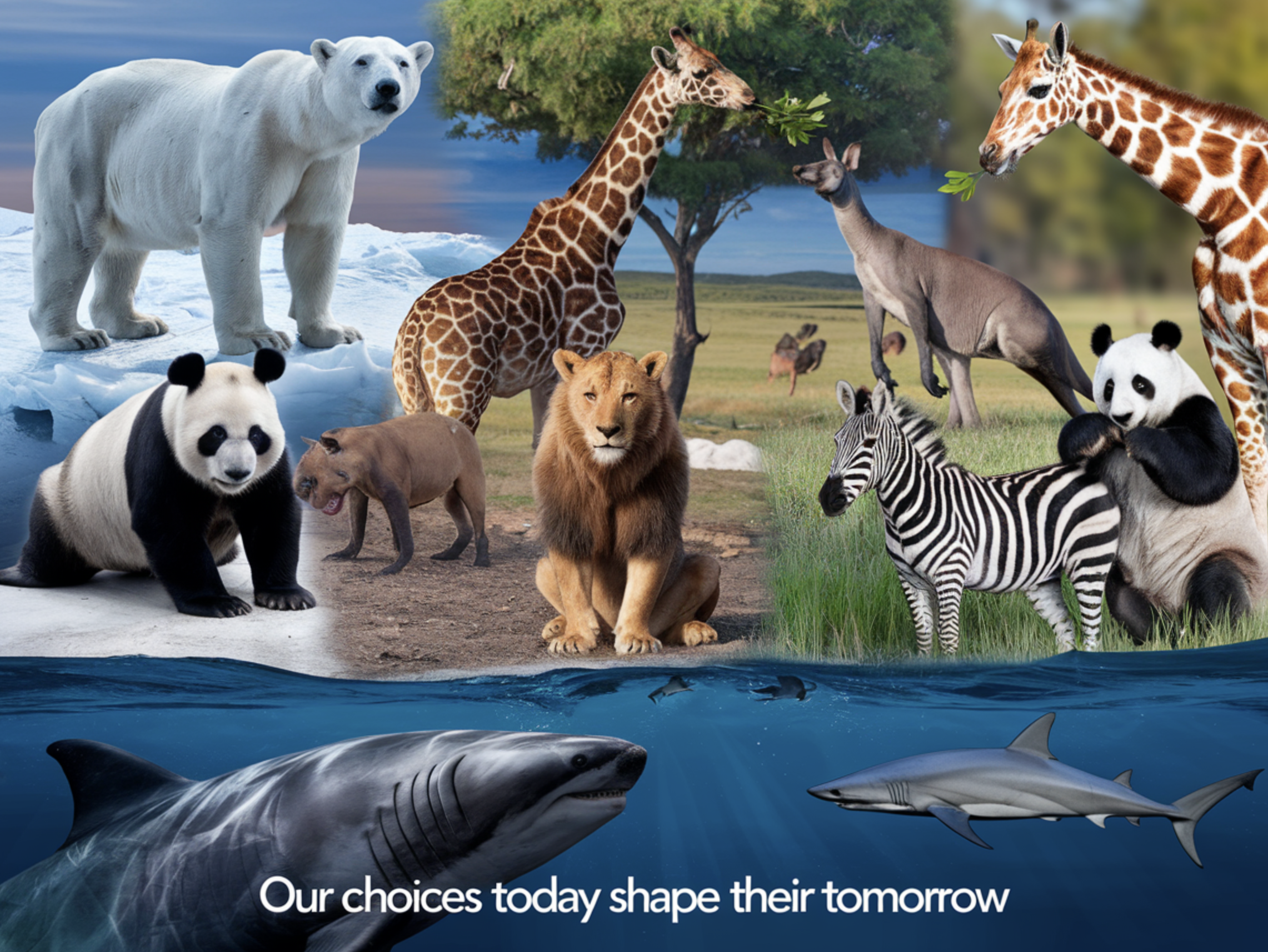
“Our Choices Today Shape Their Tomorrow: A Cross-Ecosystem Conservation Initiative”
Objective
To highlight the interconnectedness of global ecosystems and emphasize human responsibility in wildlife conservation. This campaign aims to demonstrate how the Aquatic Life Institute’s mission extends beyond aquatic species to encompass a holistic approach to biodiversity protection, positioning the organization as a thought leader in comprehensive conservation efforts that bridge terrestrial and marine environments.
Approach
The campaign utilizes a powerful visual collage that juxtaposes diverse wildlife from multiple ecosystems—polar, savanna, forest, and marine environments. This deliberate design choice illustrates the comprehensive nature of conservation needs while the tagline “Our choices today shape their tomorrow” creates a direct emotional connection between human actions and wildlife futures. The composition moves visually from land to sea, reinforcing the message that all ecosystems are connected and equally deserving of protection. The photographic montage style makes complex ecological relationships accessible to viewers without specialized knowledge.
Intended Audience
- Conservation-minded individuals across demographic groups
- Policy makers and governmental agencies with environmental portfolios
- Corporate stakeholders considering sustainability initiatives
- Educational institutions teaching environmental science
- Potential donors and supporters of wildlife conservation efforts
- Youth and families who represent the next generation of conservation advocates
Impact
The campaign aims to:
- Increase cross-organizational partnerships by 20% through highlighting the interconnectedness of conservation causes
- Drive 35% growth in multi-year donor commitments by appealing to supporters interested in comprehensive approaches
- Generate media coverage highlighting the importance of cross-ecosystem conservation thinking
- Influence public perception by increasing understanding of how terrestrial choices affect marine life by 25%
- Position the Aquatic Life Institute as a forward-thinking organization that recognizes the need for holistic conservation approaches beyond traditional organizational boundaries
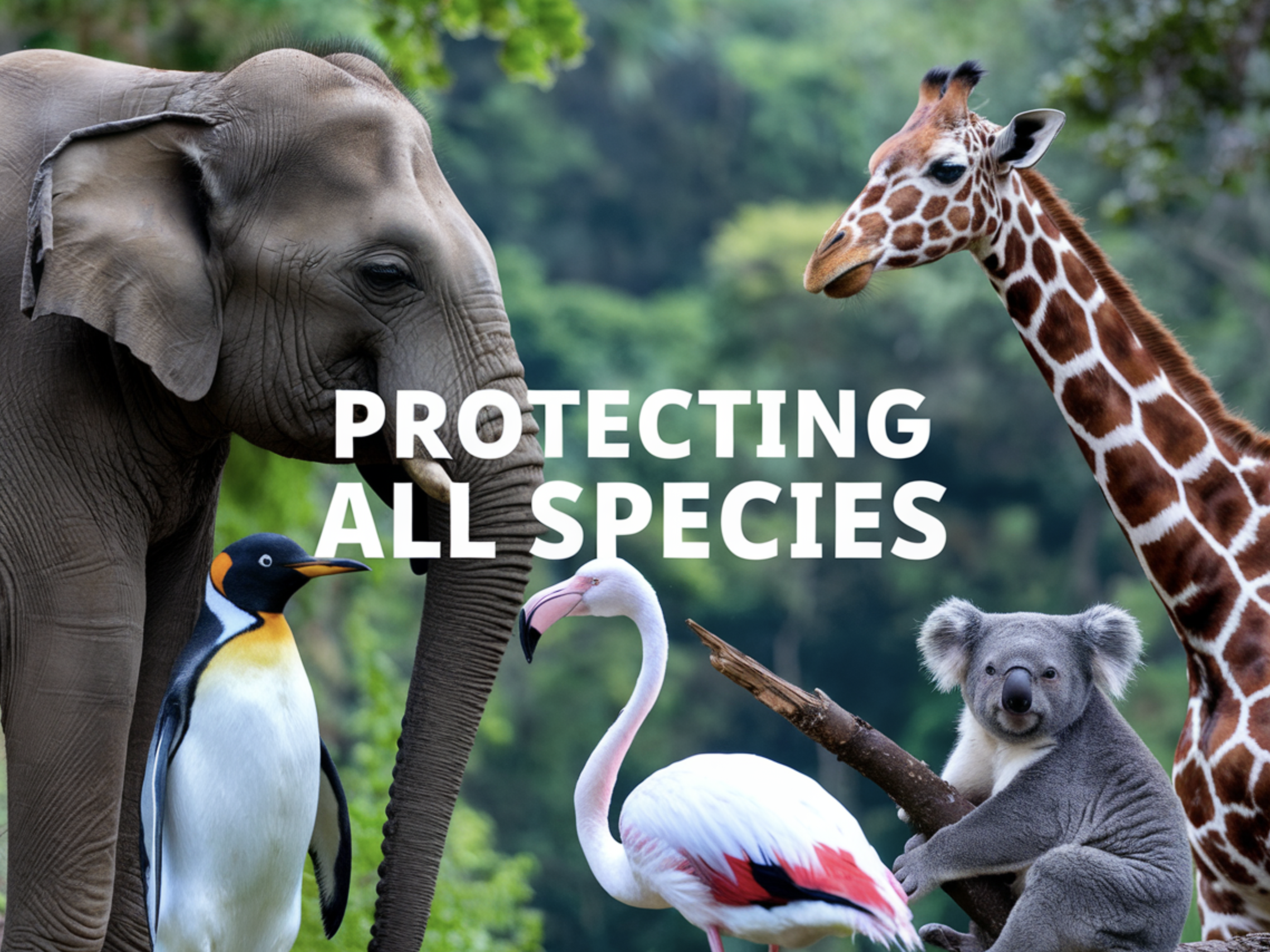
“Protecting All Species: Expanding the Scope of Compassionate Conservation”
Objective
To position the Aquatic Life Institute as an organization advocating for a more inclusive approach to conservation that extends beyond aquatic species. This campaign aims to build bridges between traditionally siloed conservation efforts, highlight the institute’s commitment to comprehensive biodiversity protection, and demonstrate how marine conservation principles can inform and strengthen broader wildlife protection initiatives.
Approach
The campaign employs a visually striking mosaic of iconic species from different habitats—terrestrial (elephant, giraffe, koala), avian (penguin, flamingo), and implicit aquatic connections. The bold, central message “PROTECTING ALL SPECIES” establishes a clear, universal mission while the arrangement of animals suggests harmony and interconnectedness. The design deliberately places diverse species in close proximity against a lush green backdrop, symbolizing a healthy ecosystem where all species thrive together. The professional wildlife photography brings authenticity to the message while emotionally connecting viewers to these charismatic representatives of global biodiversity.
Intended Audience
- Conservation professionals working across different ecosystem specialties
- Policy makers responsible for environmental protection legislation
- Donors and funders interested in comprehensive biodiversity initiatives
- Educational institutions teaching environmental science and conservation
- Partner organizations focused on specific species or habitats
- General public passionate about wildlife protection across ecosystems
Impact
The campaign aims to:
- Increase cross-sector collaboration by 30% through initiatives connecting aquatic and terrestrial conservation efforts
- Expand the institute’s supporter base by 25% by attracting those interested in broader wildlife protection
- Generate 5-7 new institutional partnerships with traditionally land-focused conservation organizations
- Position the Aquatic Life Institute as a thought leader in breaking down artificial barriers between conservation domains
- Influence conservation funding models to recognize and support more holistic, cross-ecosystem approaches
- Drive a measurable shift in public perception about the institute’s scope and expertise beyond purely aquatic issues

“Preserving Our Shared Planet: Celebrating and Protecting Marine Biodiversity”
Objective
To raise awareness about the rich diversity of marine life and promote the urgent need for ocean conservation. This campaign aims to showcase the Aquatic Life Institute’s expertise in marine species protection while emphasizing the shared responsibility for ocean health. By highlighting various marine species in an artistic presentation, the campaign seeks to foster emotional connections to underwater ecosystems that may otherwise remain abstract to the general public.
Approach
The campaign features an artistically rendered underwater scene with diverse marine species—sea turtles, sharks, dolphins, tropical fish, and coral—against a deep blue ocean backdrop. The central message “PRESERVING OUR SHARED PLANET” emphasizes collective ownership and responsibility. The illustrative style creates an engaging, accessible visual that appeals to audiences of all ages while still conveying scientific accuracy in species representation. The composition deliberately includes species from different marine habitats and trophic levels, communicating the importance of complete ecosystem protection rather than focusing solely on charismatic megafauna.
Intended Audience
- Ocean conservation advocates and marine protection organizations
- Educational institutions and students studying marine biology
- Policy makers involved in ocean protection legislation
- General public with interest in ocean health and marine wildlife
- Potential donors and supporters of marine conservation initiatives
- Coastal communities directly affected by ocean health
Impact
The campaign aims to:
- Increase public engagement with marine conservation issues by 40% through social media sharing and educational outreach
- Drive at least 20% growth in newsletter signups from new audience segments
- Generate partnerships with 3-5 major marine research institutions
- Provide educational resources to at least 100 schools for marine conservation curriculum
- Influence policy discussions on marine protected areas by providing compelling visual materials for advocacy efforts
- Establish the Aquatic Life Institute as a leading voice in comprehensive marine ecosystem protection

“Every Voice Matters: Engaging Children in Animal Advocacy”
Objective
To develop a child-friendly educational initiative that introduces young audiences to concepts of animal welfare and conservation. This campaign aims to create early awareness about animal rights and welfare issues while establishing the Aquatic Life Institute as a forward-thinking organization that values inclusive education and multi-generational engagement in conservation ethics.
Approach
The campaign employs cheerful, animated animal characters representing diverse species in a non-threatening, approachable style. The central lion character holds a sign with the simple but powerful message “EVERY VOICE MATTERS,” making complex advocacy concepts accessible to young minds. The cartoon aesthetic creates immediate appeal for children while the diverse assembly of animals (lion, elephant, giraffe, zebra, hippo) communicates unity across species. The design deliberately uses friendly facial expressions and bright colors to create positive associations with animal protection, avoiding potentially frightening or distressing imagery that might alienate young audiences.
Intended Audience
- Elementary school children (ages 5-12)
- Parents and caregivers seeking age-appropriate conservation education
- Teachers and educational institutions
- After-school programs and youth organizations
- Children’s media producers and publishers
- Family-oriented community events and venues
Impact
The campaign aims to:
- Reach at least 250 schools with free educational materials
- Develop a companion curriculum that meets educational standards for science and social studies
- Create a measurable increase in children’s understanding of basic animal welfare concepts
- Generate family discussions about ethical treatment of animals
- Establish the foundation for lifelong conservation values in young audiences
- Position the Aquatic Life Institute as an organization that values education and youth engagement
- Create a pathway for future expansion into aquatic-specific educational content for children
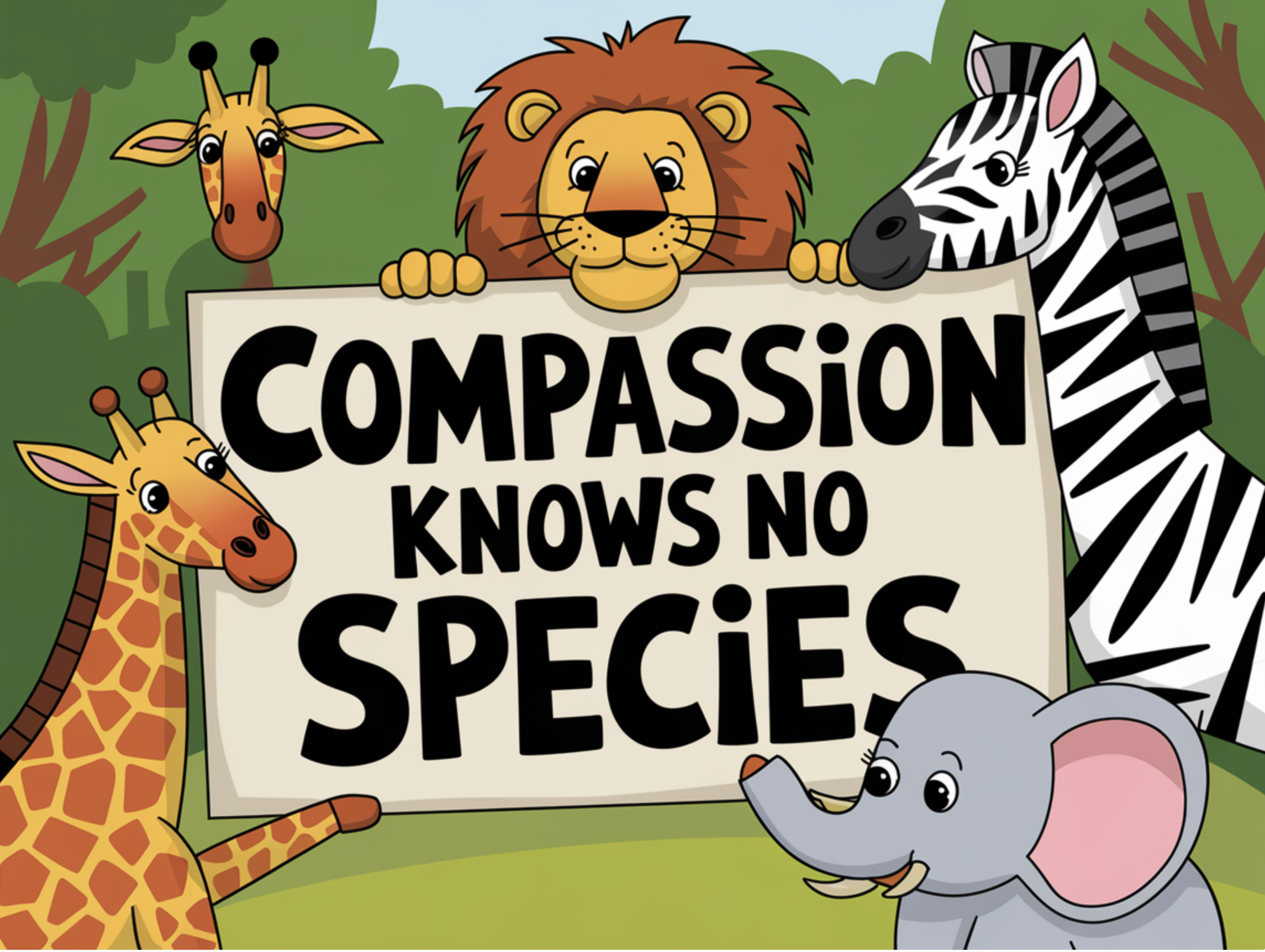
“Compassion Knows No Species: Building Empathy in Young Conservationists”
Objective
To create an engaging educational program that teaches children the concept of universal compassion toward all animals, regardless of species. This initiative aims to expand the Aquatic Life Institute’s reach to younger audiences by using child-friendly illustrations to introduce ethical concepts that will later inform their understanding of animal welfare issues, including those affecting less visible aquatic species.
Approach
The campaign utilizes cheerful, cartoon-style animal characters from familiar African wildlife (giraffe, lion, zebra, elephant) collaboratively holding a sign with the clear message “COMPASSION KNOWS NO SPECIES.” The friendly, approachable art style creates immediate appeal for children aged 4-10, while the simple yet profound message introduces a foundational concept in animal ethics. The design deliberately shows the animals working together, modeling the cooperation and mutual respect the campaign seeks to inspire. The forest backdrop provides context while keeping focus on the central characters and message.
Intended Audience
- Elementary school children (primarily K-5)
- Teachers and education professionals
- Parents and caregivers
- Children’s museums and science centers
- Community organizations hosting youth programs
- Libraries and reading programs
- Youth-focused conservation clubs
Impact
The campaign aims to:
- Reach 100,000+ children through a combination of school programs and digital materials
- Develop a complementary curriculum with age-appropriate activities exploring compassion for all animals
- Create measurable increases in children’s stated empathy toward diverse animal species
- Establish early understanding that compassion should extend beyond familiar pets and charismatic wildlife
- Build a foundation for later introduction of more complex aquatic welfare concepts
- Create a branded character set that can be expanded to include aquatic animals in future phases
- Position the Aquatic Life Institute as an organization committed to nurturing the next generation of animal advocates

“Their Welfare Is Our Responsibility: Advancing Ethical Standards in Animal Care”
Objective
To promote a fundamental shift in how society views its obligations toward all animals by emphasizing human responsibility for animal welfare. This campaign aims to position the Aquatic Life Institute as an organization advocating for comprehensive welfare standards across all animal care contexts, while creating conceptual bridges between wildlife conservation, captive animal welfare, and aquatic species protection.
Approach
The campaign features a powerful photographic image of land predators (bear, lion, wolf) in what appears to be a managed habitat setting, paired with the direct message “THEIR WELFARE IS OUR RESPONSIBILITY.” The realistic photography creates immediate emotional impact and authenticity, while the composition of multiple predator species in proximity suggests their shared vulnerability despite their natural power. The text overlay establishes a clear ethical framework of human obligation that applies across species boundaries. The natural setting with habitat elements communicates the importance of appropriate environments for all animals under human care or influence.
Intended Audience
- Zoo and aquarium professionals and management
- Animal welfare policy makers and regulators
- Conservation organizations focused on habitat preservation
- Animal care facilities and their visitors
- Ethical consumers making animal welfare-conscious choices
- Academic institutions studying animal welfare science
- General public with emerging interest in animal welfare issues
Impact
The campaign aims to:
- Increase public recognition of human ethical responsibilities toward animals by 30%
- Drive institutional adoption of higher welfare standards in at least 15 major animal care facilities
- Generate media coverage focusing on evolving understanding of animal welfare needs
- Establish new partnerships with 3-5 major zoological associations
- Position the Aquatic Life Institute as a thought leader in ethical frameworks for animal care
- Create measurable improvements in welfare standard implementation for diverse species
- Build conceptual bridges that help stakeholders understand connections between terrestrial and aquatic animal welfare needs

“Choose Ethical Alternatives to Animal Testing: Advancing Science Without Suffering”
Objective
To advocate for the replacement of animal testing with more ethical and scientifically valid alternatives. This campaign aims to raise awareness about the ethical issues surrounding animal experimentation while positioning the Aquatic Life Institute as an organization that addresses animal welfare issues beyond aquatic species. By highlighting viable alternatives, the campaign seeks to advance a constructive conversation about transitioning to more humane research methods.
Approach
The campaign features a stark, documentary-style photograph of rabbits and rodents in cramped laboratory conditions, paired with the direct call to action “CHOOSE ETHICAL ALTERNATIVES TO ANIMAL TESTING.” The unfiltered visual creates immediate emotional impact by showing the reality of animal testing conditions, while the messaging focuses not on blame but on positive alternatives. This balanced approach appeals to both ethical concerns and scientific advancement. The design deliberately shows multiple animals in confined spaces to communicate the scale of the issue while the semi-transparent text overlay ensures the animals remain visible, reinforcing their status as individuals rather than mere research tools.
Intended Audience
- Scientific research community and biomedical researchers
- Regulatory agencies and policy makers in research oversight
- Companies in cosmetics, pharmaceutical, and chemical industries
- Consumer advocacy groups and ethical consumers
- Educational institutions and research ethics committees
- Students considering careers in scientific research
- Medical professionals and healthcare stakeholders
Impact
The campaign aims to:
- Increase public awareness of animal testing alternatives by 40%
- Drive corporate commitments to adopt alternative testing methods from at least 10 major companies
- Generate substantive media coverage highlighting innovation in non-animal testing methods
- Create partnerships with 3-5 research institutions developing alternative testing methodologies
- Influence policy discussions around research requirements and regulations
- Position the Aquatic Life Institute as an advocate for evidence-based welfare improvements across species
- Provide educational resources about the scientific limitations of animal testing and superiority of newer methods

“Sentient Beings, Not Test Subjects: Recognizing Animal Consciousness Across Species”
Objective
To promote understanding and recognition of animal sentience as a fundamental basis for ethical treatment across all species. This campaign aims to shift public perception from viewing animals as objects to recognizing them as conscious beings deserving of moral consideration. By including terrestrial and aquatic species, the Aquatic Life Institute demonstrates its commitment to advancing welfare for all sentient animals while emphasizing that consciousness transcends taxonomic boundaries.
Approach
The campaign features powerful photographic portraits of three distinct species representing different evolutionary branches—a lion (mammalian terrestrial predator), a gorilla (great ape with recognized cognitive complexity), and a dolphin (marine mammal with documented intelligence). The bold statement “SENTIENT BEINGS, NOT TEST SUBJECTS” directly challenges objectification of animals in research and entertainment. The close-up portrait composition creates eye-to-eye connection with each animal, evoking recognition of their individual consciousness and presence. The design deliberately avoids showing animals in captive or testing environments, focusing instead on their inherent dignity and conscious presence.
Intended Audience
- General public with emerging interest in animal ethics
- Policy makers considering animal welfare legislation
- Research institutions and ethics committees
- Educational settings teaching animal cognition and ethics
- Corporate decision makers regarding animal use policies
- Conservation and animal welfare organizations
- Media outlets covering animal sentience research
Impact
The campaign aims to:
- Increase public understanding of sentience as a scientific concept by 40%
- Drive 25% growth in support for sentience-based welfare policies
- Generate substantial media coverage of recent animal cognition research
- Establish partnerships with at least 5 major research institutions studying animal consciousness
- Influence corporate and institutional policies regarding animals in testing, entertainment and research
- Position the Aquatic Life Institute as a leading voice in the conversation about consciousness across species
- Create educational resources about sentience that span terrestrial and aquatic species

“Support Humane Research Alternatives: Science Without Suffering”
Objective
To mobilize public support for replacing animal testing with more humane and scientifically advanced research methods. This campaign aims to create emotional connection to the issue while providing a constructive call to action, positioning the Aquatic Life Institute as an organization concerned with welfare issues across all animal groups. By using impactful visuals with a clear action message, the campaign seeks to drive both public awareness and tangible policy changes.
Approach
The campaign features an emotive illustrated scene depicting a beagle receiving an injection alongside caged laboratory animals (rat and rabbit), paired with the direct message “SUPPORT HUMANE RESEARCH ALTERNATIVES.” The illustration style creates emotional impact while avoiding potentially disturbing photographic imagery that might alienate some viewers. The artistic approach allows for controlled emotional messaging while still accurately representing laboratory conditions. The composition deliberately places the dog in the foreground to create immediate emotional connection, while the caged smaller animals reinforce the widespread nature of animal testing across species. Laboratory equipment in the background establishes the scientific context.
Intended Audience
- General public with growing concern about animal welfare issues
- Scientific community and research institutions
- Policy makers involved in research regulations
- Corporations using animal testing for product development
- Students and educators in scientific fields
- Ethical consumers making informed purchasing choices
- Animal welfare advocates seeking constructive solutions
Impact
The campaign aims to:
- Increase public awareness of humane research alternatives by 35%
- Generate 50,000+ signatures on petitions supporting policy changes
- Drive corporate commitments from at least 15 companies to transition to alternative testing methods
- Establish partnerships with 3-5 research institutions developing innovative non-animal testing methodologies
- Create educational resources explaining the scientific and ethical advantages of alternative testing methods
- Position the Aquatic Life Institute as a thought leader in advocating for evidence-based welfare improvements
- Influence legislative discussions around research requirements and regulatory acceptance of alternative methods
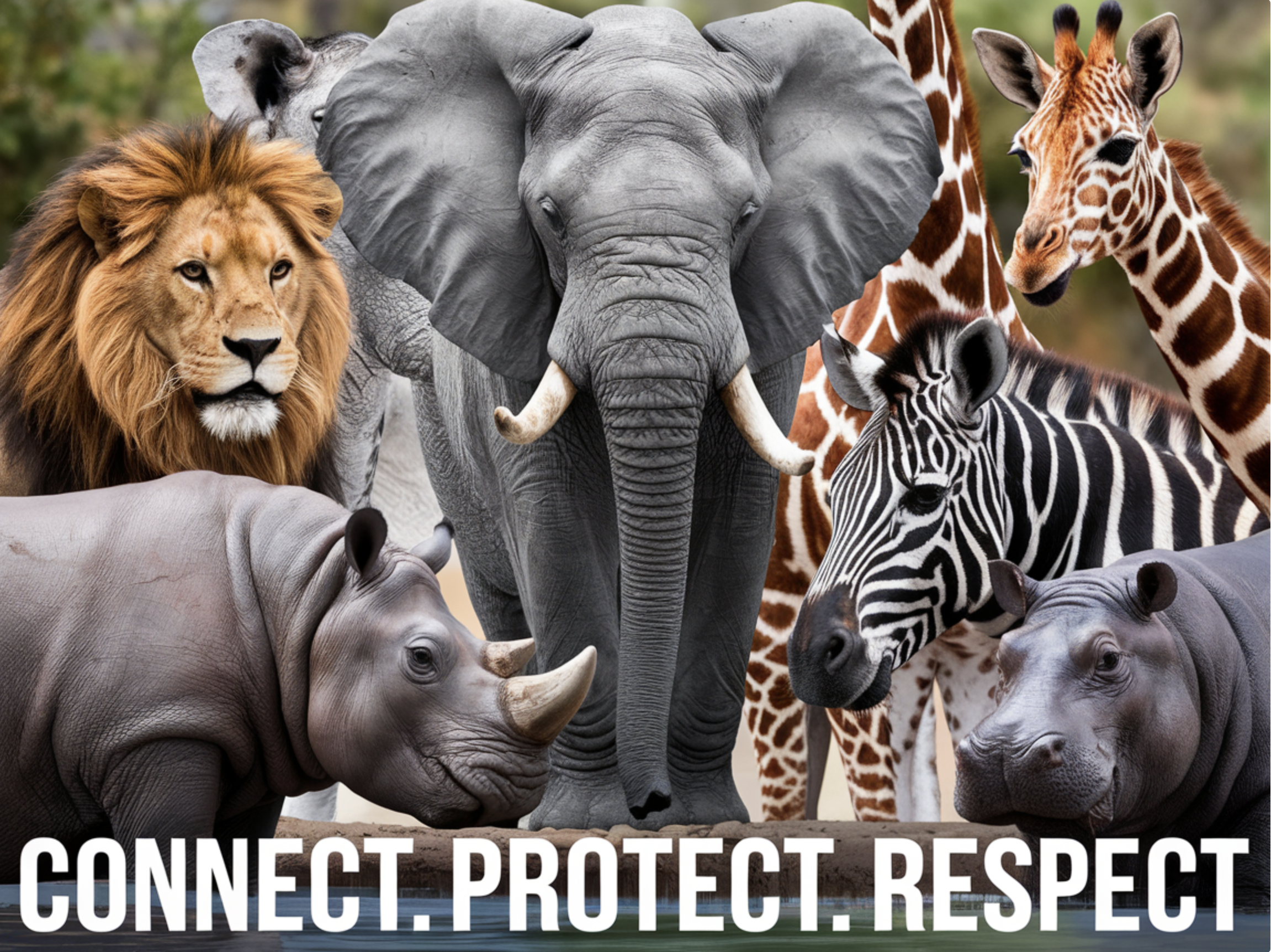
Connect. Protect. Respect: Preserving Africa’s Iconic Wildlife Heritage”
Objective
To build emotional connection to African wildlife conservation while promoting a holistic approach that encompasses both protection and respect for these species. This campaign aims to demonstrate how the Aquatic Life Institute’s ethical principles extend beyond aquatic species to embrace a comprehensive view of animal welfare and conservation, particularly for threatened terrestrial megafauna facing significant poaching and habitat loss challenges.
Approach
The campaign features a powerful visual collage of iconic African wildlife—elephant, lion, rhinoceros, zebra, giraffe, and hippopotamus—arranged in a cohesive, forward-facing composition. The strong three-word directive “CONNECT. PROTECT. RESPECT.” establishes a clear framework for engagement with wildlife conservation. The photographic quality creates immediate emotional impact through the dignified, direct gazes of the animals, while the collage format symbolizes the interconnectedness of species within ecosystems. The design deliberately showcases multiple species at risk from poaching (elephant, rhino) alongside other iconic African wildlife to communicate the comprehensive nature of conservation needs.
Intended Audience
- Wildlife conservation advocates and donors
- Safari tourism participants and enthusiasts
- Educational institutions teaching conservation biology
- Policy makers involved in international wildlife protection
- Corporate supporters of conservation initiatives
- General public with interest in African wildlife
- Conservation organizations seeking partnership opportunities
Impact
The campaign aims to:
- Increase public engagement with African wildlife conservation by 30%
- Drive growth in donations targeting anti-poaching initiatives
- Generate media coverage highlighting the ethical dimensions of wildlife protection
- Establish partnerships with 3-5 major African conservation organizations
- Position the Aquatic Life Institute as an organization with a comprehensive view of animal welfare
- Create educational resources highlighting connections between terrestrial and aquatic conservation challenges
- Influence public perception about the importance of respecting wildlife as sentient beings, not just resources
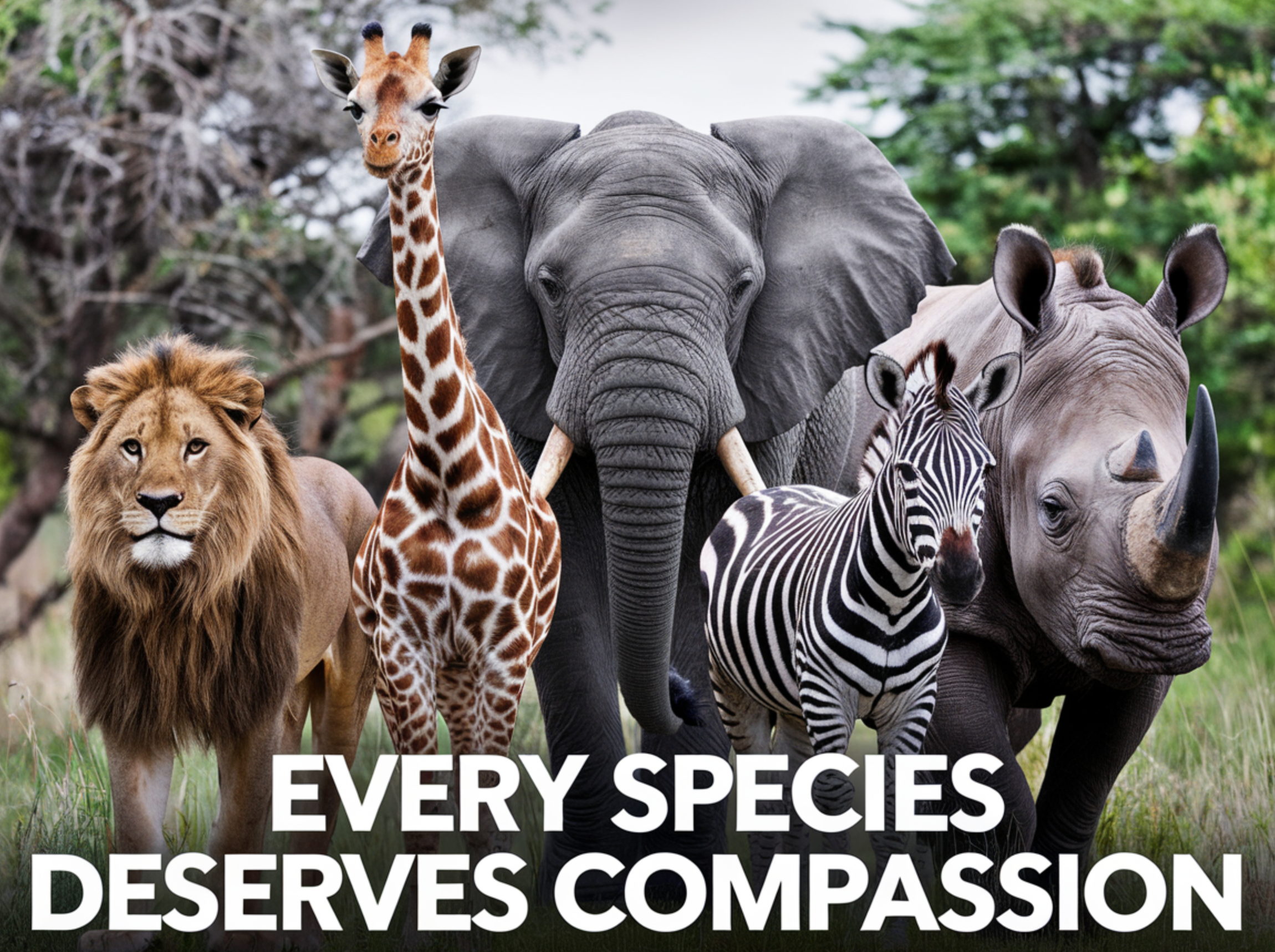
“Every Species Deserves Compassion: Extending Ethical Consideration Across the Animal Kingdom”
Objective
To promote a foundational ethic of universal compassion that extends beyond traditional boundaries of species, charisma, or conservation status. This campaign aims to establish a consistent moral framework for animal welfare advocacy while positioning the Aquatic Life Institute as an organization committed to inclusive ethical principles that seamlessly connect terrestrial and aquatic species protection efforts.
Approach
The campaign features a powerful photographic composition of iconic African megafauna (lion, giraffe, elephant, zebra, rhino) in their natural habitat, paired with the clear ethical statement “EVERY SPECIES DESERVES COMPASSION.” The high-quality wildlife photography creates immediate emotional connection, while the natural setting emphasizes the animals’ dignity and place within their ecosystem. The design deliberately showcases a diverse array of species with different appearances and ecological roles to reinforce the message of universal ethical consideration. The forward-facing perspective of the animals creates a sense of direct engagement with viewers, inviting them to recognize each animal as an individual worthy of moral consideration.
Intended Audience
- General public interested in wildlife and animal welfare
- Conservation supporters and donors
- Policy makers involved in animal protection legislation
- Educational institutions teaching environmental ethics
- Faith communities exploring ethical stewardship
- Wildlife protection advocates seeking philosophical frameworks
- Existing supporters of specific animal protection causes who may expand their concern
Impact
The campaign aims to:
- Increase public understanding of compassion as a unifying ethical framework for animal protection by 35%
- Drive 25% growth in support for inclusive welfare policies that protect diverse species
- Generate substantive media discussion about extending moral consideration across species boundaries
- Establish partnerships with organizations focused on specific species to create unified messaging
- Position the Aquatic Life Institute as a thought leader in ethical frameworks that encompass all animals
- Influence conversations about moral inconsistencies in how different species are treated
- Create educational resources that help audiences develop more consistent ethical perspectives on animal welfare
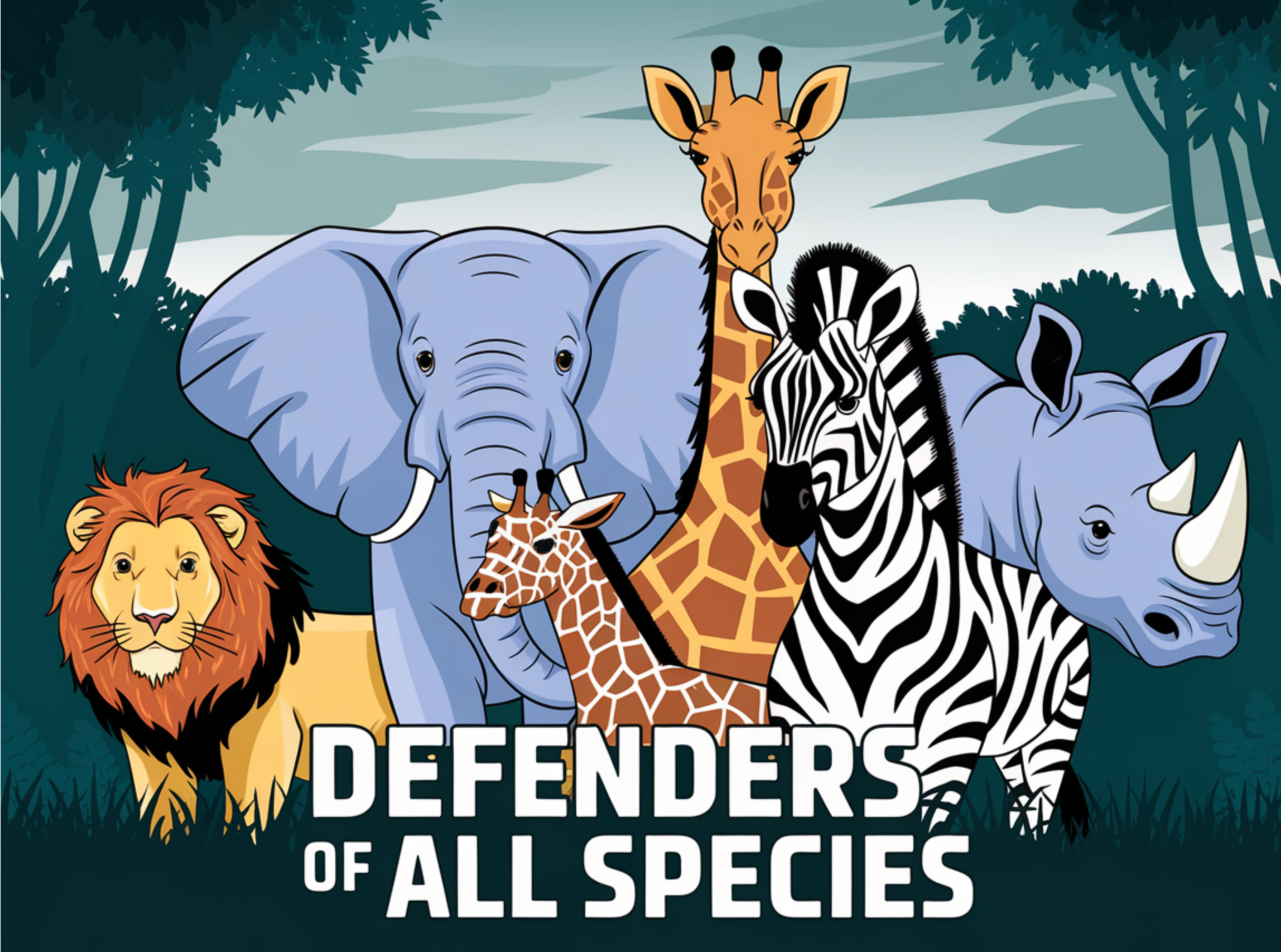
“Defenders of All Species: United for Global Wildlife Protection”
Objective
To position the Aquatic Life Institute as an organization committed to comprehensive animal advocacy across ecosystems, moving beyond traditional single-species or habitat-specific approaches. This campaign aims to emphasize the interconnectedness of animal protection efforts while demonstrating the institute’s expanded vision that embraces both terrestrial and aquatic species conservation under a unified ethical framework.
Approach
The campaign features a striking, natural-habitat photograph of Africa’s “Big Five” wildlife (zebra, lion, elephant, giraffe, rhinoceros) standing together in a savanna landscape, paired with the bold declaration “DEFENDERS OF ALL SPECIES.” The professionally composed wildlife imagery creates immediate visual impact by showing these iconic animals in a unified group against an authentic ecosystem backdrop. The design deliberately places the animals in a forward-facing, almost sentinel-like formation that reinforces the “defenders” concept, suggesting both protection of these species and their symbolic role as representatives of wildlife globally. The natural savanna setting with acacia trees communicates ecological context while the composition of traditionally competing species standing together symbolizes the unity needed in conservation approaches.
Intended Audience
- Conservation advocates and donors across different cause areas
- Policy makers involved in international wildlife protection
- Partner organizations focused on specific species or regions
- Educational institutions teaching conservation biology
- Corporate supporters seeking comprehensive ESG initiatives
- General public with interest in wildlife protection
- Media outlets covering conservation and animal welfare issues
Impact
The campaign aims to:
- Establish the Aquatic Life Institute’s identity as a comprehensive animal advocacy organization
- Increase cross-sector collaboration between traditionally separated conservation efforts by 40%
- Drive 30% growth in support from donors interested in holistic approaches to animal protection
- Generate media coverage highlighting the benefits of unified conservation strategies
- Create at least 7 new partnerships with organizations focused on terrestrial species protection
- Influence conservation funding models to recognize interconnected ecosystem approaches
- Position the institute as a bridge-builder between marine and terrestrial conservation communities
 Patricia Baronowski-Schneider